
The term “no tax on overtime” can be misleading, as it does not mean all overtime is tax-free. Federal law only allows deductions for specific “qualified” overtime; otherwise, overtime wages remain taxable.
Filing errors often happen due to miscalculations or discrepancies between your tax return and your employer’s records. If you receive an IRS notice, do not assume it is automatically correct. Carefully compare it against your own records and respond by the deadline. This guide explains the 2026 rules, common filing errors, possible notices, and the steps available to correct a return.
|
Key Takeaways
|
What Is the No Tax on Overtime Deduction? A No Tax on Overtime IRS Penalty 2026 Guide
The no tax on overtime IRS penalty 2026 issue begins with the deduction’s limited definition. The deduction applies to qualified overtime compensation required under federal wage law.
It does not remove overtime from wages or make the entire overtime check tax-free. Taxpayers who want to understand IRS penalties should first confirm what portion of their pay can legally be included in the calculation.
Understanding the One Big Beautiful Bill Act (OBBBA)
The One Big Beautiful Bill Act, or OBBBA, added the federal deduction for qualified overtime compensation. It applies for tax years 2025 through 2028 and is available whether a taxpayer itemizes deductions or takes the standard deduction.
An OBBBA overtime error often occurs because the rule’s popular name leaves out key limits. The deduction does not exclude wages from gross income.
When the Deduction Applies
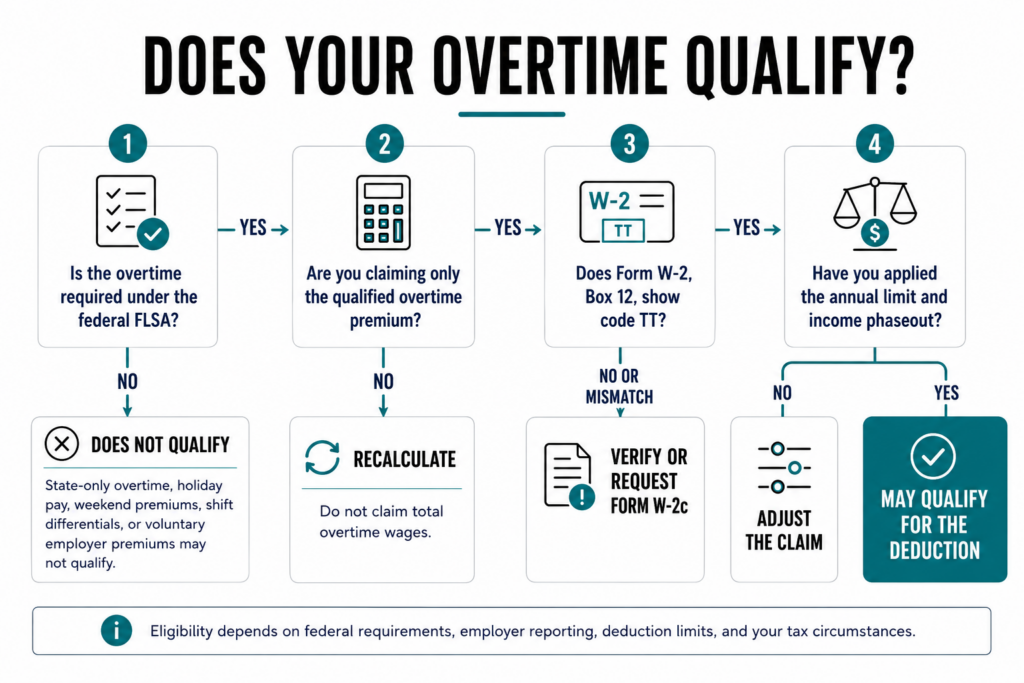
For an overtime deduction 2026 claim, qualified compensation generally means the premium portion required by Section 7 of the Fair Labor Standards Act, or FLSA, that exceeds the employee’s regular rate.
Example:
An employee’s regular rate is $20 per hour, and the employee receives $30 for an FLSA-required overtime hour. The $10 premium may be qualified overtime compensation. The full $30 is not the deductible amount.
Who Qualifies for the Deduction
The deduction is available only when the taxpayer and the overtime compensation meet the applicable federal requirements. Before claiming it, taxpayers should confirm that they satisfy each eligibility condition.
Overtime tax deduction eligibility generally requires taxpayers to:
- Receive qualified overtime compensation under the Fair Labor Standards Act (FLSA)
- Have a Social Security number that is valid for employment
- File a joint return if they are married
- Use the qualified overtime amount reported in Form W-2, Box 12, under code TT
- Apply the applicable annual deduction limit
- Account for any income-based phaseout that may reduce the deduction
Payroll records showing additional overtime do not automatically allow taxpayers to claim more than the qualified amount reported by their employer. If the reported figure appears incorrect, the employee should contact the employer and request a corrected W-2 before filing.
Why Are Taxpayers Receiving IRS Penalty Notices?
An IRS notice over an overtime deduction issue can arise when information on a tax return appears inconsistent, unsupported, or mathematically incorrect. A notice may propose an adjustment, ask for information, or explain a penalty.
Overclaiming Eligible Overtime Wages
An overtime deduction penalty risk for 2026 may begin when the taxpayer treats all overtime wages as deductible. The law generally covers only the qualifying premium above the regular rate and applies annual and income-based limits.
Before filing, compare the amount entered on Schedule 1-A with Form W-2, Box 12, code TT, and the relevant payroll records. The reported figure is an input to the calculation, not a guarantee that the whole figure will be deductible after the limits and phaseout are applied.
Claiming Non-Qualified Overtime
An overtime payment can still be taxable income even when it does not qualify for the federal deduction. Common overtime reporting mistakes include claiming premium pay that arises from:
- Working more than eight hours in one day
- Working on a holiday or weekend
- A union or employment agreement
- A state overtime requirement that differs from the FLSA
- A voluntary employer incentive or premium
Such payments may be taxable overtime wages without qualifying for the federal deduction.
Incorrect Employer Reporting
W-2 overtime reporting can be wrong in either direction. An employer may overstate qualified compensation, omit it, or place an amount under the wrong code. For 2026, code TT in Box 12 is the key employee reporting field.
An overstated W-2 does not authorize an excessive claim. The taxpayer may consider only qualified overtime actually paid.
The Most Common Overtime Deduction Errors in 2026
The most common OBBBA overtime error is treating a payroll label as proof of deductibility. The tax return must reflect the statutory premium, the employer-reported amount, the annual cap, filing status, and any income-based reduction.
|
Common error |
Why it causes a problem | What to verify |
|
Gross overtime claimed |
The deduction generally covers only the qualifying premium. | Regular rate and FLSA premium |
|
Duplicate entry |
The same overtime amount is deducted more than once. |
Schedule 1-A and all wage forms |
| Limit overlooked | The annual cap or income phaseout reduces the allowed amount. |
Filing status, MAGI, and deduction limit |
| Incorrect W-2 used | The return may conflict with employer reporting. |
Box 12 code TT and any Form W-2c |
Reporting Gross Instead of Qualified Overtime
An overtime deduction calculation should separate regular wages from the qualifying FLSA premium. If a worker earns time and a half, the base-rate portion is still ordinary compensation. Only the additional half may meet the basic definition.
Double Claiming Overtime Income
Common filing errors include combining figures incorrectly, entering the same amount twice, or mixing software imports with manual entries. To avoid these:
- Claim the deduction only once on the appropriate schedule.
- Compare your Schedule 1-A entries against your Forms W-2 and 1099.
- If filing jointly, keep a simple worksheet tracking each spouse’s contribution and applicable limits.
Misunderstanding Annual Deduction Limits
The overtime deduction limits are $12,500 for most returns and $25,000 for married couples filing jointly. The deduction begins to phase out when modified adjusted gross income exceeds $150,000, or $300,000 for joint filers.
A no-tax overtime IRS penalty 2026 concern can arise when the taxpayer copies the code TT amount directly without completing the rest of Schedule 1-A. Employer reporting may exceed the amount ultimately deductible.
Filing Before Receiving Corrected Tax Forms
If code TT is missing or incorrect, ask the employer for a corrected W-2 before filing. A corrected W-2 supports the revised amount and reduces the chance that the return will conflict with information available to the IRS.
What IRS Notices Are Being Sent?
The type of IRS notice an overtime deduction case a person receives depends on how the issue is found and what the IRS proposes to change.
|
Possible notice |
What it generally means | First response step |
|
CP2000 |
A proposal based on information that does not match the return. | Compare the proposal with the W-2 and Schedule 1-A. |
| Math error notice | The IRS changed an arithmetic or processing entry. |
Check the calculation and response rights. |
| Penalty notice | The IRS may charge penalties if an underpayment is due to negligence, failing to follow rules, or understating your income. |
Review the legal basis and relief options. |
Read More: IRS Failure-to-File vs. Failure-to-Pay Penalty: What’s the Real Cost?
What Penalties Can Apply for Overclaiming?
A 2026 IRS no-tax-overtime penalty outcome depends on the cause and size of the underpayment. The IRS may disallow the excess deduction, assess additional income tax, charge interest, and in qualifying cases impose an accuracy-related penalty. Taxpayers can resolve IRS tax penalties by addressing both the tax adjustment and any separate penalty determination.
Accuracy-Related Penalties
The accuracy-related penalty is generally 20% of the portion of an underpayment attributable to negligence or disregard of rules. A substantial-understatement rule can also apply.
IRS penalties depend on the return facts. A reasonable, good-faith position with records is different from knowingly inflating a deduction.
Interest on Underpaid Taxes
IRS interest generally runs on unpaid tax from the date payment was due until it is paid. Interest can also accrue on certain penalties. Correcting an error promptly may reduce future interest, although it does not erase interest already required by law.
Additional Tax Assessments
An IRS tax assessment may reflect the tax created by reducing or removing an overstated deduction. This additional tax is separate from an accuracy-related penalty. A taxpayer may owe the tax and interest even when penalty relief is granted.
Important Note:
Federal tax rules depend on your facts and can change. This article provides general information and is not a substitute for advice about your return or notice.
What To Do If You Receive an IRS Notice
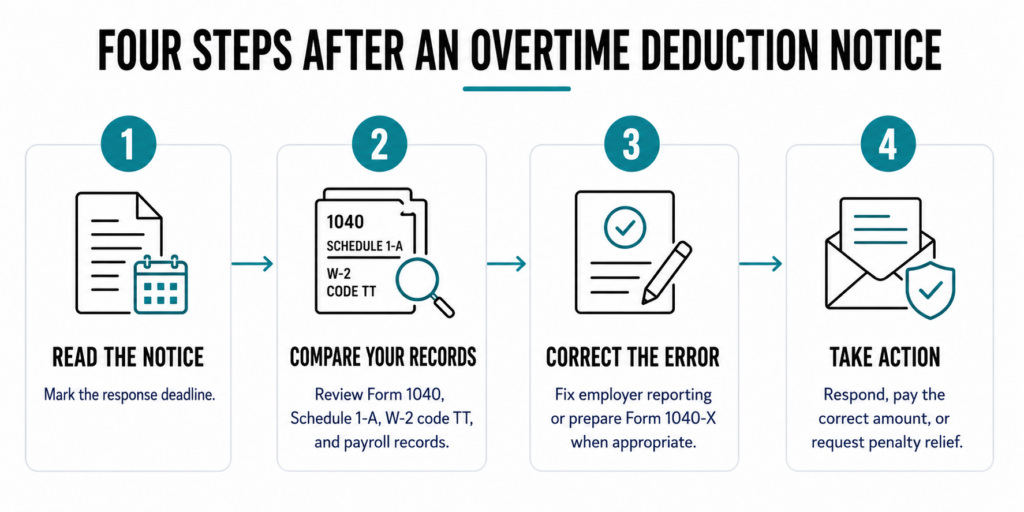
Start an IRS notice overtime deduction review with the document itself. Confirm the taxpayer name, tax year, notice number, proposed changes, amount due, and response date. Then compare the letter with the filed return and wage records.
Review Your Tax Return
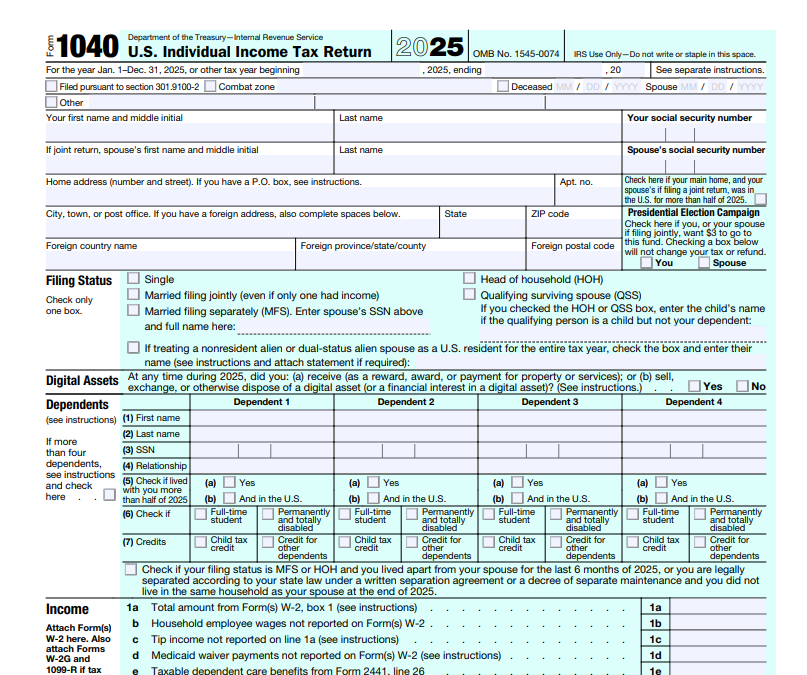
For an effective IRS notice response, locate the filed Form 1040 and Schedule 1-A. Identify the amount claimed for qualified overtime and the documents used to calculate it. Check whether tax software imported the figure or whether it was entered manually.
Compare Your W-2 Information
Review overtime wages on pay statements, the Form W-2 wage boxes, and Box 12 code TT. Remember that code TT reports qualified overtime compensation paid, which can be higher than the deduction allowed after the annual cap or phaseout.
If the W-2 amount is wrong, contact the employer. Keep emails, payroll summaries, and any corrected form. If you need assistance interpreting the adjustment, you can get help with IRS notices.
Respond Before the Deadline
An IRS notice usually explains the proposed adjustment, the reason for it, and the date by which the taxpayer must respond. Reading the entire notice before taking action can help prevent an incomplete or misdirected response.
Before responding to an IRS notice:
- Confirm the response deadline
- Follow the submission instructions stated in the notice
- Include copies of the requested supporting documents
- Keep the original notice and tax records
- Retain proof that the response was submitted
A late response can reduce the available options or allow the proposed adjustment to move forward.
Request Penalty Relief if Appropriate
Penalty abatement may be available when the law and facts support reasonable cause, good-faith reliance, or another recognized basis. Relief is not automatic and does not necessarily remove the underlying tax or interest.
A request should explain what happened, when it happened, what steps the taxpayer took to comply, and which records support the explanation. Taxpayers can explore IRS penalty relief services before submitting a request.
How to Correct an Incorrect Overtime Deduction
Correcting your tax return can help reduce penalties. The next step depends on your return’s status, whether you’ve received an IRS notice, and the accuracy of your employer’s tax forms.
Filing an Amended Return
Form 1040-X is used to change deductions and other amounts on a previously filed individual return. Wait until the original return has been processed. Explain the change and include the corrected schedules required for the amended figures.
Paying the Correct Tax Balance
IRS payment options may include full electronic payment or an installment arrangement, depending on eligibility and circumstances. Paying the correct balance sooner can stop additional interest from accumulating on the amount paid.
Correcting Employer Reporting Issues
W-2 corrections matter greatly after 2025. If qualified overtime is missing or understated for 2026, ask the employer for Form W-2c.
If the W-2 overstates qualified overtime, claim only the actual qualifying amount and ask the employer to correct the form. Retain the corrected W-2 and payroll records with the return file.
You can also get help with IRS notices before agreeing to a proposed change.
How to Avoid Overtime Deduction Errors Next Year
Preventing an OBBBA overtime error is easier when payroll and tax records are reviewed before the return is submitted. A short reconciliation can identify missing code TT reporting, duplicate entries, claims above the limits, and other OBBBA overtime errors.
Keep Accurate Payroll Records
Accurate payroll records can help taxpayers calculate the deduction and respond if the IRS later questions the amount claimed. These documents should clearly show how the employee’s regular and overtime compensation was determined.
Taxpayers should keep:
- Pay stubs showing regular earnings and overtime earnings
- Forms W-2 and W-2c
- Year-end payroll summaries
- Employer overtime policies
- Records of regular pay rates and overtime hours
- Timesheets or attendance records
- Communications concerning payroll corrections
- The worksheet used to calculate qualified overtime
- A copy of the filed tax return and supporting schedules
These records can help support the deduction or explain a difference identified by the IRS. They may also help the employer locate and correct a W-2 reporting error.
Verify Employer Forms Before Filing
Taxpayers should compare their year-end tax forms with their payroll records before submitting the return. This review can identify reporting differences while there is still time to request a correction.
Before filing the return:
- Compare each W-2 with the final pay statement
- Check Form W-2, Box 12, for code TT
- Confirm that the reported amount is consistent with payroll records
- Separate qualified overtime premiums from total overtime wages
- Apply the applicable annual deduction limit
- Check whether the income-based phaseout applies
- Review Schedule 1-A for duplicate or incorrect entries
- Confirm that the same income has not been claimed twice
- Request Form W-2c if the employer’s reporting appears incorrect
- Wait for the corrected form before filing when the error affects the deduction
Completing these checks can reduce the risk of an OBBBA overtime error, an overstated deduction, or a mismatch between the tax return and the information reported to the IRS.
How Salinger Tax Consultants Can Help
Salinger Tax Consultants provides notice and penalty assistance for taxpayers who need help understanding an adjustment and choosing a response. The team can review the notice, the filed return, and the documents behind the overtime deduction.
Reviewing IRS Notices
IRS penalty assistance begins by identifying what the IRS changed and whether the notice requests information, proposes tax, or asserts a penalty. Salinger Tax Consultants can help organize the response and supporting records. You can understand IRS penalties before deciding how to proceed.
Correcting Tax Return Errors
Amended returns may be appropriate when the deduction was entered incorrectly, or a corrected employer form changes the return. The team can review the original filing and help prepare the correction in a manner consistent with any existing IRS correspondence.
Requesting Penalty Abatement
Penalty abatement requests require facts and documentation. Salinger Tax Consultants can evaluate whether reasonable cause or another available basis may apply and present the request without guaranteeing approval. For help with the tax, penalty, and response strategy, review the firm’s IRS penalty relief services.
Conclusion
The overtime deduction can reduce federal taxable income, but its popular name should not be read as a blanket exemption for overtime pay.
If a letter arrives, verify the notice number, deadline, Schedule 1-A calculation, and W-2 code TT before responding. An overtime deduction penalty concern for 2026 may involve additional tax and interest without necessarily supporting a penalty.
Salinger Tax Consultants can review the notice, correct return errors, and help present a supported response. To discuss your tax year, employer forms, and available next steps, contact our tax professionals or learn how the team can help you resolve IRS tax penalties.
FAQs
An IRS notice overtime deduction issue may involve an incorrect calculation, unsupported compensation, missing information, or a mismatch with employer reporting. Read the notice to learn what the IRS changed and how to respond.
An overtime deduction penalty 2026 error can lead to disallowance of the excess deduction, additional income tax, and interest. An accuracy-related penalty may apply when legal requirements are met, although a deduction mistake does not automatically trigger one.
Yes. An amended tax return using Form 1040-X may be used to correct a deduction after the original return has been processed. If the IRS has already sent a notice, follow that notice’s instructions before filing separately.
The IRS has not published a list of notices used specifically for overtime deduction errors. An IRS CP2000 can propose changes based on information mismatches, while a math-error notice can correct certain processing errors.
IRS penalty relief may be available when the facts support reasonable cause, good faith, or another applicable standard. A request should identify the penalty, explain the circumstances, and include supporting records.
No. Overtime deduction eligibility generally depends on compensation required under Section 7 of the FLSA. Voluntary employer premiums, holiday pay, and overtime arising only from a contract or another law may not qualify.
For 2026 W-2 overtime reporting, review Box 12 for code TT and compare the amount with year-end payroll records. If the amount is missing or understated, request Form W-2c from the employer.
Keep payroll records, pay stubs, Forms W-2 and W-2c, Schedule 1-A, the filed return, and the worksheet used to calculate qualified overtime. Records showing the regular rate, overtime hours, and premium amount may also help.

