

Many businesses claimed the Employee Retention Credit (ERC) during the COVID-19 pandemic to offset payroll costs. However, thousands of these claims are now under review, and the IRS continues to increase enforcement efforts in 2026. If your claim is denied, you may have to repay part or all of the credit, along with interest and, in some cases, penalties.
Understanding ERC repayment 2026 requirements is critical if you’ve received an IRS notice or are concerned about your claim. Acting quickly can help reduce additional costs and protect your business from collection actions.
|
Key Takeaways • ERC repayment 2026 may require businesses to repay the full credit, plus interest, if the IRS determines the claim was incorrect. • The IRS continues expanding ERC audit 2026 efforts to review questionable claims submitted during the pandemic. • Businesses typically have limited time to respond after receiving an IRS ERC notice before additional collection actions begin. • Proper payroll records and eligibility documentation remain the strongest defense during an ERC audit. • Businesses unable to repay immediately may qualify for IRS payment arrangements depending on their financial situation. |
Why More ERC Claims Are Being Reviewed
ERC repayment 2026 refers to the process of returning Employee Retention Credit funds when the IRS determines that a business received credits it was not entitled to claim. Repayment may include the original refund, accrued interest, and potentially additional penalties depending on the circumstances.
Although many businesses legitimately qualified for the ERC, the IRS has increased enforcement after identifying a significant number of questionable claims. As a result, more employers are receiving audit notices and claim disallowance letters.
Why More ERC Claims Are Being Reviewed
The IRS is reviewing more ERC claims because it identified widespread filing errors and misleading advice from third-party promoters. Many businesses were encouraged to claim credits without fully meeting eligibility requirements.
Some of the most common triggers for an ERC audit 2026 include:
- Large refund claims compared to payroll size
- Businesses claiming credits despite remaining fully operational
- Missing payroll documentation
- Inconsistent payroll tax filings
- Claims prepared by high-risk ERC promoters
The IRS continues comparing payroll tax returns, amended returns, and supporting records to verify each claim.
Recent IRS Enforcement Trends
The IRS has significantly expanded enforcement efforts involving Employee Retention Credit disallowance cases. These reviews are expected to continue throughout 2026 as the agency works through pending claims and previously issued refunds.
Current enforcement efforts include:
|
IRS Activity |
Purpose |
|
ERC claim reviews |
Verify eligibility |
|
Payroll tax examinations |
Confirm reported wages |
| Document requests |
Validate supporting records |
| Refund recovery |
Recover improperly issued credits |
| Civil penalties |
Address negligent or fraudulent claims |
Pro Tip

If you receive an IRS notice, avoid automatically assuming the claim is incorrect. Carefully review the IRS findings and compare them against your payroll records before responding.

What Does an ERC Disallowance Mean?
An Employee Retention Credit disallowance means the IRS has determined that all or part of your ERC claim does not qualify under current tax rules. Depending on the findings, you may need to repay the credit you received.
A disallowance does not automatically mean fraud occurred. Many cases involve documentation issues, eligibility misunderstandings, or calculation errors.
Full vs Partial Claim Disallowance
The IRS may completely reject your ERC claim or allow only part of it.
|
Type of Disallowance |
What It Means |
|
Full Disallowance |
Entire ERC claim is denied and must generally be repaid. |
| Partial Disallowance |
Only certain wages or tax periods are disallowed. |
| Documentation Adjustment |
Additional records may support part of the original claim. |
Businesses receiving a partial ERC claim denial should carefully review which wages or quarters were affected before determining the repayment amount.
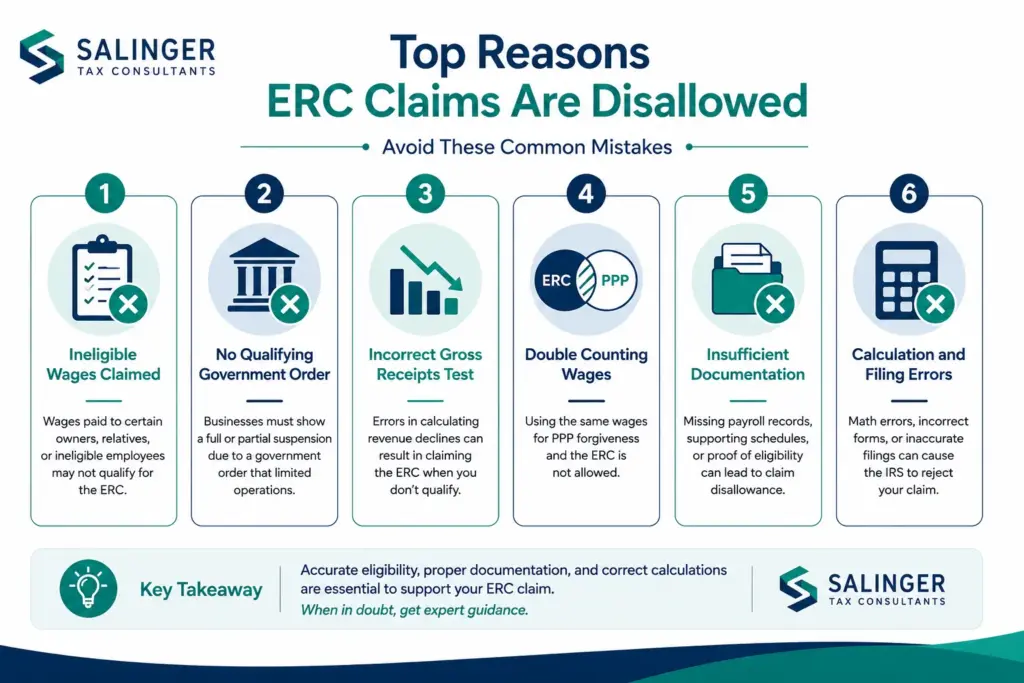
Common IRS Reasons for Disallowing ERC Claims
The IRS generally disallows claims because businesses fail to meet one or more ERC eligibility requirements.
Common reasons include:
- Claiming wages that do not qualify.
- Failing to demonstrate a government-ordered suspension.
- Incorrect gross receipts calculations.
- Double-counting wages already used for PPP loan forgiveness.
- Insufficient payroll documentation.
- Mathematical errors on amended payroll tax returns.
Many clients who contact us are surprised to learn that relying on an ERC promoter does not protect them if the IRS later determines the claim was inaccurate.
Why the IRS Is Auditing ERC Claims
The ERC audit 2026 initiative focuses on identifying claims that may have been filed incorrectly or without sufficient supporting evidence. Businesses that maintain complete records generally have a much stronger position during an audit.
Aggressive ERC Marketing Schemes
One of the biggest reasons for increased ERC audit activity is the large number of businesses that were encouraged to file questionable claims.
The IRS has repeatedly warned taxpayers about promoters that:
- Guaranteed qualification without reviewing records.
- Charged fees based on refund amounts.
- Ignored IRS eligibility requirements.
- Submitted amended payroll returns with minimal documentation.
Businesses remain responsible for the accuracy of every tax return filed on their behalf.
Documentation Deficiencies
Incomplete payroll tax documentation remains one of the leading reasons claims fail during an IRS review.
Businesses should retain records including:
- Payroll registers
- Quarterly payroll tax returns
- Forms 941 and amended Forms 941-X
- Health insurance expense records
- Government shutdown orders, where applicable
- Gross receipts calculations
- Internal payroll reports
Proper documentation allows businesses to support their eligibility if the IRS requests additional information.
Eligibility Errors
ERC eligibility depends on meeting specific IRS requirements for each tax period claimed. Businesses that misunderstood these rules are more likely to receive audit notices.
Common eligibility mistakes include:
- Assuming every COVID-related disruption qualified.
- Miscalculating quarterly revenue declines.
- Including ineligible employee wages.
- Claiming credits for periods outside qualifying dates.
Businesses should compare their original calculations with current IRS guidance before responding to any audit findings.
Common Mistake

Many employers assume that receiving an ERC refund means the IRS has permanently approved the claim. In reality, the IRS may audit eligible claims years after the refund is issued if questions arise.
How the IRS Notifies Businesses of an ERC Disallowance
The IRS generally begins the process by issuing an IRS ERC notice explaining why the claim is being reviewed or disallowed. These notices outline the proposed adjustments and provide instructions for responding.
Ignoring the notice can lead to additional interest, penalties, and collection activity.
IRS Audit Letters Explained
An ERC audit notice explains what information the IRS needs and why it believes your claim may not qualify.
Depending on the situation, the IRS may request:
- Payroll records
- Financial statements
- Eligibility documentation
- Copies of amended payroll tax returns
- Additional explanations supporting the claim
Businesses should respond with organized documentation rather than sending incomplete records over multiple submissions.
Response Deadlines
Meeting IRS deadlines is one of the most important parts of protecting your rights during an ERC examination.
Although response periods vary by notice, many IRS letters require action within 30 days. Missing these deadlines may limit your ability to challenge the findings before repayment begins.
ERC Response Checklist
- Read the notice completely.
- Confirm which tax periods are affected.
- Gather payroll documentation.
- Compare IRS findings with your records.
- Consider seeking professional guidance before responding.
Read More: Avoid Penalties, Embrace Flexibility – Get Help From Peter Salinger!
What Happens If Your ERC Claim Is Disallowed?
If the IRS disallows your ERC claim, you may have to repay ERC IRS funds, along with interest and, in some cases, penalties. The IRS will explain the proposed adjustments in its notice and provide instructions on how to respond or challenge the decision.
A disallowance does not automatically end your options. Depending on your situation, you may be able to provide additional documentation, appeal the findings, or request a payment arrangement if repayment creates financial hardship.
Repayment of Refunds
Businesses that received an ERC refund after filing amended payroll tax returns generally must repay ERC IRS amounts that the IRS determines were claimed incorrectly.
The amount you repay depends on:
- The portion of the credit disallowed.
- Whether the entire claim or only certain quarters were denied.
- Any interest that accrued after the refund was issued.
| Repayment Component | Description |
| ERC Refund | Credit amount determined to be ineligible |
| Interest | Calculated from the applicable IRS date |
| Penalties | May apply if negligence or noncompliance is found |
Key takeaway: Review the IRS calculation carefully before making a payment. Errors in payroll records or eligibility determinations may affect the final repayment amount.
Interest and Potential Penalties
In addition to repaying the credit, businesses may owe ERC repayment interest if the IRS determines the refund should not have been issued.
The IRS generally charges interest from the date the refund was paid until the balance is repaid. Depending on the circumstances, penalties may also apply for negligence, substantial understatement, or failure to comply with payroll tax requirements.
However, penalties are not automatic. Businesses that acted in good faith and maintained reasonable records may have options to request penalty relief in certain situations.
Collection Actions for Non-Payment
If repayment is not made and no payment arrangement is established, the IRS may begin normal IRS collections procedures.
Potential collection actions include:
- Balance due notices.
- Federal tax liens.
- Tax levies.
- Payment demands.
- Collection referrals.
Many clients who contact us wait until collection notices arrive, but addressing repayment early often provides more resolution options and reduces additional interest.
How to Calculate the Amount You Must Repay
An ERC repayment calculation depends on the amount of credit disallowed, any interest assessed, and payroll tax adjustments required by the IRS.
Review every IRS calculation carefully before submitting payment.
Tax Credit Received
The first step is identifying how much ERC was originally received.
| Calculation Step | Example |
| ERC Received | $120,000 |
| IRS Disallowed | $80,000 |
| Credit Remaining | $40,000 |
Businesses with partial claim disallowances only repay the portion the IRS determines was improperly claimed.
Interest Calculations
The IRS calculates IRS interest based on federal interest rates that change quarterly.
Interest continues accruing until the balance is fully paid.
Factors affecting interest include:
- Refund issue date.
- Payment date.
- Applicable quarterly interest rate.
- Outstanding balance.
Because interest changes over time, requesting an updated payoff amount before making payment is often beneficial.
Payroll Tax Return Adjustments
Many ERC claims involved amended payroll tax returns, such as Form 941-X. If the IRS disallows a claim, additional payroll tax corrections may be required.
These adjustments can affect:
- Employer payroll taxes.
- Income tax deductions.
- Payroll records.
- Future tax filings.
Businesses should ensure every adjustment matches IRS findings to avoid additional notices later.
Pro Tip

Keep copies of every payroll tax return, amended filing, and IRS notice in one location. Organized documentation makes responding to IRS requests much easier.
Steps Business Owners Should Take Immediately
An ERC repayment checklist helps businesses respond quickly and avoid unnecessary delays after receiving an IRS notice.
Review IRS Findings Carefully
Read every page of the IRS notice before responding.
Pay attention to:
- Tax periods involved.
- Reason for the Employee Retention Credit disallowance.
- Requested documentation.
- Response deadlines.
- Appeal rights.
Avoid assuming the IRS is automatically correct. Compare its findings with your own records.
Gather Supporting Documentation
Strong ERC documentation remains your best defense.
Documents to collect include:
- Payroll records.
- Forms 941 and 941-X.
- Payroll journals.
- Gross receipts reports.
- Government shutdown documentation.
- Health insurance expense records.
- Internal payroll calculations.
One issue we frequently encounter is businesses providing incomplete documentation because records are spread across multiple payroll providers.
Consult a Payroll Tax Professional
Professional payroll tax filing services can help determine whether the IRS findings are accurate and identify available resolution options.
Businesses facing significant repayment amounts often benefit from an independent review before responding.
Can You Appeal an ERC Disallowance?
Yes. Businesses may challenge an ERC appeal through several IRS procedures if they disagree with the findings.
IRS Administrative Appeal Options
The IRS appeal process allows businesses to request an independent review after an examination.
Appeals typically require:
- Supporting documentation.
- Written explanation.
- Timely filing.
- Response to IRS findings.
Many disputes are resolved without litigation when sufficient evidence supports the original claim.
Requesting Audit Reconsideration
IRS audit reconsideration allows taxpayers to request another review if important documentation was unavailable during the original examination.
This option may be appropriate when:
- New records become available.
- IRS calculations contain errors.
- Documentation was overlooked.
Litigation Options
If administrative options do not resolve the dispute, businesses involved in an ERC tax dispute may pursue litigation when appropriate.
Because litigation can be expensive and time-consuming, most businesses first exhaust available IRS appeal options.
Repayment Options If You Cannot Pay Immediately
Businesses unable to repay immediately still have several IRS payment options depending on their financial situation.
Installment Agreements
An IRS installment agreement allows eligible taxpayers to repay balances through monthly payments instead of one lump sum.
Benefits include:
- Predictable monthly payments.
- Reduced collection risk.
- Continued compliance.
- Flexible repayment schedules.
Offer in Compromise (When Applicable)
Some businesses experiencing severe financial hardship may qualify for IRS tax relief through an Offer in Compromise.
An Offer in Compromise is a program that allows eligible taxpayers to settle tax debt for less than the full amount owed when they cannot reasonably pay the balance.
Qualification depends on:
- Financial condition.
- Assets.
- Income.
- Collection potential.
Not every ERC repayment qualifies, but it may be available in certain circumstances.
Other Collection Alternatives
Additional IRS payment plan options may include:
- Temporary collection delays.
- Currently Not Collectible status.
- Penalty relief requests.
The right solution depends on each business’s financial circumstances.
How to Avoid ERC Problems in the Future
Strong payroll tax compliance helps reduce the likelihood of future ERC disputes and payroll tax examinations.
Maintain Complete Payroll Records
Accurate payroll documentation should be retained for every payroll tax filing.
Recommended records include:
- Payroll reports.
- Tax returns.
- Wage calculations.
- Employee benefit records.
- Supporting financial statements.
The IRS generally recommends retaining employment tax records for at least four years.
Verify Eligibility Before Claiming Credits
Businesses should independently verify ERC eligibility rather than relying solely on marketing firms.
Review:
- IRS guidance.
- Revenue records.
- Payroll documentation.
- Government orders.
Work With Qualified Tax Professionals
Businesses looking to prevent future ERC issues should get help with payroll tax compliance before filing payroll tax returns or claiming future employment tax credits.
How Salinger Tax Consultants Can Help
Payroll tax issues often require more than simply responding to an IRS notice. They require a clear strategy backed by accurate documentation and an understanding of IRS procedures.
ERC Audit Assistance
Our payroll tax audit support services help businesses organize documentation, communicate with the IRS, and navigate every stage of an ERC examination.
Payroll Tax Compliance Services
Our payroll tax compliance services help businesses maintain accurate payroll tax filings, reduce compliance risks, and prepare documentation that supports future IRS examinations.
IRS Notice Response Support
If you’ve received an ERC audit letter or another IRS notice, don’t wait. Respond to an IRS payroll tax notice as soon as possible to preserve your rights and avoid additional interest or collection actions.
Conclusion
Understanding why the claim was disallowed, reviewing the IRS findings carefully, and responding within the required deadlines can significantly improve your outcome.
Whether you need help reviewing payroll records, responding to an IRS audit, appealing a claim disallowance, or exploring repayment options, experienced guidance can make the process more manageable.
Salinger Tax Consultants helps businesses navigate complex payroll tax matters with practical, personalized solutions. From ERC audit support to payroll tax compliance and IRS notice responses, our team helps businesses resolve issues efficiently and confidently. Speak with a payroll tax specialist today to discuss your situation and determine the next best step.
FAQs
An Employee Retention Credit disallowance means the IRS determined that all or part of your ERC claim was ineligible, and you may need to repay the credit plus applicable interest.
If the IRS determines your claim was incorrect, you generally must repay ERC IRS funds associated with the disallowed portion of the credit.
The ERC audit 2026 initiative focuses on reviewing claims affected by aggressive marketing, documentation issues, and eligibility errors.
An ERC repayment 2026 amount generally includes the disallowed credit, accrued interest, and any applicable penalties based on IRS calculations.
Businesses may owe ERC repayment interest, and penalties may apply depending on the circumstances surrounding the claim.
Yes. Businesses may request an ERC appeal through the IRS administrative appeals process or other available review procedures.
Eligible taxpayers may qualify for an IRS installment agreement to repay the balance over time.
Maintain complete ERC documentation, including payroll records, Forms 941 and 941-X, gross receipts reports, and government shutdown documentation.
The IRS audit period varies depending on the facts and applicable law, but ERC claims may remain subject to examination for several years.
Yes. Experienced payroll tax services can help review IRS findings, prepare documentation, and identify the most appropriate response strategy.

