

Self-employed professionals and freelancers often leave thousands of dollars in tax deductions on the table simply because they do not know what expenses qualify.
Self-employed tax deductions 2026 include everything from home office costs to software subscriptions, vehicle mileage to health insurance premiums, and many deductions that go unclaimed year after year.
This guide walks through the complete list of self-employed tax deductions available for 2026, explains which Schedule C deductions you can claim, and identifies frequently missed write-offs that could significantly reduce your tax bill.
| Key Takeaways |
|
• Self-employed tax deductions 2026 include home office expenses, office supplies, software subscriptions, vehicle mileage, business travel, professional fees, insurance premiums, marketing costs, health insurance, and retirement plan contributions. • Schedule C deductions must be for business purposes, reasonable in amount, and directly related to generating income; personal expenses and mixed-use items are not deductible. • The home office deduction allows either a simplified method (per square foot) or an actual expense method, with different record-keeping requirements for each. • Vehicle deductions use either the standard mileage rate or the actual expense method; only business miles qualify, not commuting or personal driving. • Health insurance premiums for self-employed individuals are fully deductible above the line, meaning they reduce your adjusted gross income even if you do not itemize. |
Understanding Self-Employed Tax Deductions
Self-employed tax deductions reduce your taxable business income, lowering the amount of federal income tax and self-employment tax you owe.
Who Can Claim Self-Employment Tax Deductions?
Anyone operating a sole proprietorship, partnership, or S-corporation can claim self-employed tax deductions in 2026. This includes freelancers, consultants, contractors, gig workers with a separate business, and anyone with net profit from self-employment.
If you file Schedule C, Schedule C-EZ, or Schedule F (farm income), you qualify to claim business deductions.
How Schedule C Works for Sole Proprietors
Schedule C is where you report business income and deductions. It flows into Form 1040, reducing your taxable income on the personal return. Every business expense you claim on Schedule C must be ordinary (common in your industry) and necessary (helpful to generate income). The IRS reviews Schedule C carefully, so documentation matters.
Read more: Tax Preparation Checklist For Small Businesses
Most Common Business Expense Deductions
These business expense deductions are foundational and claimed by most self-employed professionals seeking to reduce their tax liability.
Home Office Deduction
If you have a dedicated space in your home used exclusively for business, you can deduct home office expenses.
The simplified method allows $5 per square foot (up to 300 square feet), while the actual expense method lets you deduct a percentage of rent, mortgage interest, utilities, insurance, and repairs based on office square footage.
The simplified method requires less documentation and is ideal for small offices; the actual expense method typically yields higher deductions for larger dedicated spaces.
Office Supplies and Equipment
Supplies like stationery, pens, notebooks, ink, and paper are fully deductible. Office equipment such as desks, chairs, filing cabinets, and shelving can also be deducted either through depreciation or immediately under Section 179 if the items cost under $2,500. Keep receipts and document the business purpose of purchases.
Software, Subscriptions, and Online Tools
Software licenses, cloud storage subscriptions, project management tools, accounting software, and industry-specific platforms are all deductible business expenses. This category also includes website hosting fees, email services, and membership fees for professional associations or online communities directly related to your business.
Vehicle and Travel Deductions
Transportation is often one of the largest deductible categories for self-employed professionals.
Standard Mileage vs Actual Expense Method
For 2026, the standard mileage rate covers fuel, maintenance, depreciation, and insurance on a per-mile basis. You simply track miles and multiply by the IRS rate. The actual expense method requires tracking every fuel fill-up, repair, maintenance, and insurance bill, then calculating the percentage that is business use.
Most self-employed individuals find the standard mileage method simpler, but actual expenses work better if you drive an expensive or newly purchased vehicle.
Business Travel Expenses
Airfare, hotels, car rentals, and ground transportation to client meetings, conferences, or business destinations are all deductible. Meals during business travel are deductible at 50% of cost (80% for certain meals affected by temporary rules).
Travel to a client site is business travel; daily commuting between your home and office is not.
Meals During Business Travel
The standard meal per diem rate for business meals is 50% of actual expenses, though some temporary rules may increase this.
Keep receipts or use per diem tables published by the IRS. Meals with clients where business is discussed are deductible; purely personal meals are not. Alcohol is deductible if tied to a business meal.
Professional Services and Operating Costs
These small business tax deductions keep your business running day-to-day and maintain essential operations.
Legal and Accounting Fees
Fees paid to accountants, bookkeepers, tax professionals, and attorneys for business matters are fully deductible.
This includes tax return preparation for your business (not personal tax prep), business licensing, contract review, and business planning. Keeping receipts and invoices from professionals is critical.
Business Insurance Premiums
General liability insurance, professional liability insurance, and property insurance on business assets are fully deductible.
Self-employed health insurance premiums are also deductible, claimed above the line on Form 1040, separate from Schedule C deductions.
Bank Charges and Payment Processing Fees
Monthly account fees, overdraft fees (if business-related), wire transfer fees, and payment processing fees (PayPal, Square, Stripe) paid to accept customer payments are all deductible small business tax deductions. Keep statements documenting these charges.
Marketing and Client Acquisition Expenses
Growing your client base requires investment in freelancer tax write-offs and marketing that help you attract new business.
Advertising and Paid Promotions
Advertising on Google, Facebook, LinkedIn, and other platforms is fully deductible. This includes sponsored posts, search ads, email marketing services, and promotional materials. Direct mail, flyers, and business cards are also deductible as freelancer tax write-offs.
Website and Domain Costs
Domain registration, website hosting, website design and development, and website maintenance are all deductible. Content management platforms, website builders, and e-commerce platforms used for business also qualify. Annual renewal fees for domains are deductible each year.
Business Branding and Design Costs
Logo design, branding consultants, business card design, and packaging design are deductible as marketing expenses.
Professional photography for product or portfolio images is also deductible when used for business marketing.
Health Insurance and Retirement Deductions
These deductions provide both current tax savings and future security.
Health Insurance Premiums
Self-employed health insurance premiums are fully deductible above-the-line, meaning they reduce your adjusted gross income even if you do not itemize deductions. This includes premiums for medical, dental, and vision coverage.
Deductible health insurance self-employed coverage also includes coverage for spouses and dependents.
SEP IRA, Solo 401(k), and SIMPLE IRA Contributions
Contributions to a SEP IRA allow you to save up to 25% of net self-employment income (capped at $69,000 for 2024, with adjustments for 2026). Solo 401(k) contributions can be higher, up to $69,000 total. SIMPLE IRA contributions are also deductible. These retirement deductions directly reduce your taxable income.
Education and Professional Development
Staying current in your field has tax benefits that qualify as self-employed tax deductions in 2026.
Courses, Certifications, and Workshops
Tuition and fees for courses, certifications, and workshops directly related to your business are deductible. This includes online courses, trade certifications, industry conferences, and professional development seminars. The education must improve your current skills or maintain professional standing, not train you for a new profession.
Books and Industry Publications
Books, magazines, journals, and industry publications related to your business are deductible. Online subscriptions to industry news and professional development platforms also qualify. Audiobooks and podcasts related to business development are deductible if you can document the business purpose.
Depreciation and Large Asset Purchases
Large purchases are spread over multiple years through depreciation or claimed immediately under special rules.
Equipment Depreciation
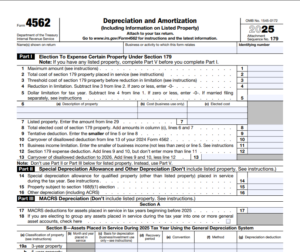
Equipment lasting more than one year is typically depreciated over several years using MACRS tables. A laptop might depreciate over 5 years; machinery over 7 years. Instead of immediate deduction, you claim a portion of the cost each year on Form 4562. This extends the tax benefit over the equipment’s useful life.
Section 179 vs Bonus Depreciation
Section 179 allows immediate expensing of equipment purchases up to $1,160,000 for 2023 (amount increases for 2026). Bonus depreciation allows 100% first-year deduction of qualified property. Both rules have phase-out limitations and require careful planning. Consult a tax professional to determine which method maximizes your deductions.
Learn: How to reduce your self-employment taxes legally.
Frequently Missed Self-Employed Deductions
Many self-employed professionals overlook these legitimate freelancer tax write-offs that could significantly reduce their tax bills.
Internet and Phone Expenses
If you use the internet and phone for business, you can deduct a portion based on the business-use percentage. If 50% of your phone bill supports business calls, deduct 50%. Home internet used for client work is partially deductible. Mobile data for business travel is also deductible.
Business Use of Personal Assets
If you use a personal vehicle, computer, or phone for business purposes, the business-use percentage is deductible. Keep a log showing business use versus personal use. If 60% of computer use is business-related, deduct 60% of the costs of software, repairs, and upgrades.
Startup Costs
Pre-opening expenses like licenses, permits, business registration, initial advertising, and market research can often be deducted or amortized over 180 months. Not all startup costs qualify, so documentation and a clear business purpose are essential.
Expenses That Are Not Tax Deductible
Knowing what does NOT qualify prevents audit risk.
Personal Expenses
Groceries, personal grooming, personal transportation (commuting), and entertainment unrelated to business are not deductible. Gym memberships, personal car payments, and home internet used only for personal browsing are not deductible business expenses.
Mixed-Use Expenses
When an item serves both personal and business purposes, only the business-use percentage is deductible. A home office in a room used partly for guests cannot be fully deducted. A vehicle used for personal trips and client visits can be deducted only for the business-use miles.
Recordkeeping Tips to Maximize Deductions
Documentation is what separates legitimate Schedule C deductions from audit targets and ensures your records withstand IRS scrutiny.
Keeping Receipts and Digital Records
Retain receipts for all business expenses exceeding $75. For meals and entertainment, write the date, amount, attendees, and business purpose on the receipt. Keep receipts for three years minimum; the IRS can audit back to three years, or six years if they find substantial underreporting.
Using Accounting Software
QuickBooks, FreshBooks, Wave, or Xero simplify expense tracking and make tax time easier. These systems categorize expenses automatically, generate reports for your accountant, and maintain an audit trail. Mileage apps like MileIQ automatically track business drives.
How Salinger Tax Consultants Help Self-Employed Professionals
Reducing your tax bill requires knowing what qualifies and tracking it properly.
Tax Planning Throughout the Year
Rather than scrambling at tax time, we work with you throughout the year to identify deductions as they occur. This approach ensures you claim everything eligible and allows us to suggest deductions you might miss on your own. Quarterly tax planning prevents surprises at filing time.
Maximizing Every Eligible Deduction
We review your business structure, spending patterns, and industry to identify deductions unique to your situation. Maximize your business tax deductions by working with professionals who understand Schedule C deductions inside and out.
Reduce Your Tax Bill with Smart Deduction Planning
Self-employed tax deductions 2026 are extensive, and the difference between claiming them strategically versus haphazardly can be thousands of dollars. The key is understanding which expenses qualify, keeping proper documentation, and implementing a system that captures everything as it happens.
Working with a tax professional ensures you claim every eligible deduction while avoiding audit risk through proper documentation. The investment in professional tax planning typically pays for itself through deductions you would otherwise miss.
If you are self-employed and want to maximize your deductions while staying compliant with IRS rules, Salinger Tax Consultants can help. Schedule a consultation with a tax expert to review your business expenses and identify deductions you may be missing. Get personalized tax planning for your business.
FAQs
Home office deduction, vehicle mileage, health insurance premiums, retirement plan contributions (SEP IRA, Solo 401k), and business travel expenses are typically the largest deductions. The size of each depends on your specific business structure and operations.
Any business expense that is ordinary in your industry and necessary to generate income can be claimed on Schedule C. This includes supplies, equipment, professional services, insurance, marketing, travel, meals, and education related to your business.
Yes, the business-use percentage of internet and phone bills is deductible. If your internet serves 60% business and 40% personal use, you can deduct 60% of the bill. Document your business use clearly.
Yes, the home office deduction is fully available in 2026. You can use either the simplified method ($5 per square foot) or the actual expense method. The choice depends on your office size and whether you rent or own.
Yes, self-employed health insurance premiums are fully deductible above the line on Form 1040. This deduction is separate from Schedule C and reduces your adjusted gross income directly.
Track all business miles driven and multiply by the IRS standard mileage rate for your tax year. Keep a mileage log showing date, destination, miles, and business purpose. Commuting miles do not count.
Personal expenses such as groceries, personal grooming, and personal vehicle payments are not deductible. Commuting between home and office is not deductible. Meals unrelated to business are not deductible.
Yes, tax preparation fees for preparing your business tax return (Schedule C) are fully deductible. Tax preparation fees for personal tax return items are not deductible on Schedule C.
Keep all receipts, invoices, and bank statements for business expenses. For vehicle mileage, maintain a detailed log. For meals, record the date, amount, attendees, and business purpose. Retain records for at least three years.
Yes, strongly recommended. A tax professional identifies deductions you might miss, ensures documentation meets IRS standards, and helps you implement a tracking system that captures everything. The cost typically pays for itself through deductions recovered.

